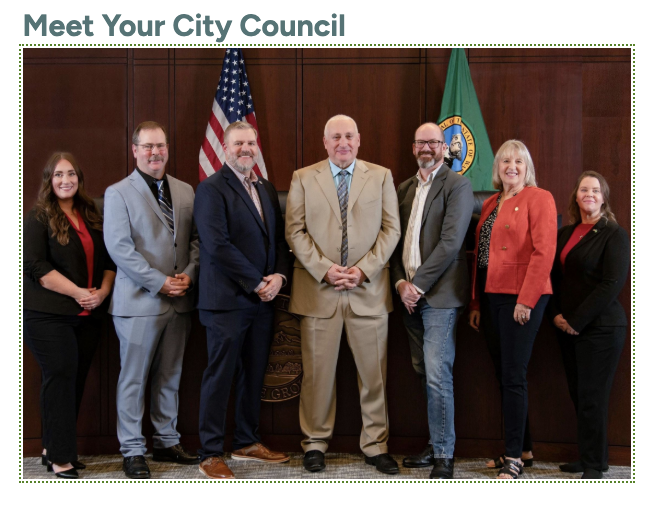
When local governments lose sight of infrastructure, roads, and municipal budgets, taxpayers usually end up picking up the tab for political theater. In Battle Ground, that tab is growing at a rapid pace.
As community concerns mount over an organized Christian Nationalist push in the town—championed by political factions tied to Camden Spiller’s fast-growing business, Maddox Industrial Transformer, and Tyler Long’s “The Master’s Church”—the Battle Ground City Council is expending valuable time and public resources trying to bend the rules of local government to satisfy a specific theological agenda. With connections tracing directly to the “Christian localism” movement championed by figures like C.R. Wiley—who frequently writes and podcasts on regional political dominion—this coordinated campaign has found a willing vehicle in the city’s highest seat: Mayor Eric Overholser.
Public records and city council archives reveal that the push for council invocations and exclusionary proclamations is an expensive, ongoing fixation that has resurfaced with a vengeance following the latest election cycle.

2024: The Battle Begins and Retreats
The push to insert religious practice into council meetings began behind the scenes in late 2024, with Councilor Victoria Ferrer acting as the main force driving the initiative. According to itemized legal invoices from the city’s contracted law firm, Menke Jackson Beyer, LLP, the city attorney was looped into the issue on December 11, 2024. The billing logs show the firm began reviewing “correspondence from city re possible invocation at the start of council meeting” and immediately had to “begin researching issues potentially presented by such an invocation and ways to address/avoid the same”.
As the calendar turned to January 2025, city staff and legal counsel were forced to spend hours analyzing the heavy liability the city could face under both the Washington State Constitution and federal anti-discrimination laws. On January 2, 2025, attorneys logged 4.5 hours researching the “potential moment of silence under the state constitution” and drafting a formal memorandum regarding the legal hurdles. By January 21, 2025, counsel spent another 4.8 hours researching the “constitutional issues presented by holding prayer/moment of silence on city property prior to council meeting” and assessing “potential liability under federal and state anti-discrimination statutes”.
Faced with an absolute minefield of potential civil rights lawsuits and strict state constitutional boundaries, the initiative hit a legal brick wall and was quietly shelved under the previous council leadership.


Post-Election: The Invocations and Proclamations Return
The hands on the wheel changed after the latest elections. In early 2026, Eric Overholser—a production operations manager at Maddox Industrial Transformer—was selected by the council to serve as Mayor. Alongside Deputy Mayor Aimee Vaile acting as his right hand on the dais, religious and partisan policies instantly shot back to the top of the priority list.
Following a controversial “National Day of Prayer” proclamation, Councilor Ferrer brought the issue back into the open, vocally demanding during council meetings that council invocations be placed right back on the agenda for future discussion.
The immediate result? The taxpayer-funded meter started running again.
According to public records detailing May 2026 legal spending, the city’s attorneys were pulled right back into the fray:
- May 5, 2026: Attorneys billed hours reviewing “points of law included in past memorandum re prayer; invocations during council meetings to determine whether any points of law have changed”.
- May 7, 2026: Senior legal counsel billed for a “preliminary re assessment of invocation and probation issues”.
- May 28, 2026: Legal staff spent billed hours conducting “Research re other jurisdiction’s policies on invocations”.
Ultimately, the bill for the city’s general legal professional services for May 2026 alone climbed to $16,663.10. While this invoice covers an assortment of municipal business (such as code enforcement and property sales), thousands of those dollars are directly tied to drafting policies and researching ways to legally maneuver a theological agenda onto the city dais.


The True Cost of Proclamation Politics
The ideological push hasn’t stopped at prayer invocations. Mayor Overholser has used his authority to issue highly partisan, exclusionary proclamations. While Overholser rejected standard citizen requests for LGBTQ+ Pride Month, he explicitly advanced right-wing culture-war statements, including a statement supporting U.S. Immigration and Customs Enforcement (ICE).
Most contentiously, Overholser sponsored a June 15, 2026, proclamation titled “Recognition and celebration of Battle Ground’s traditional nuclear families,” which local residents pointed out was calculated to explicitly omit and alienate LGBTQ+ households.
The financial and operational toll of these symbolic declarations has bled heavily into city resources:
- May 7, 2026: The city’s law firm had to bill hours for an “Initial review and analysis of proposed proclamations”.
- May 12, 2026: Counsel billed additional time to “investigate issues re same”.
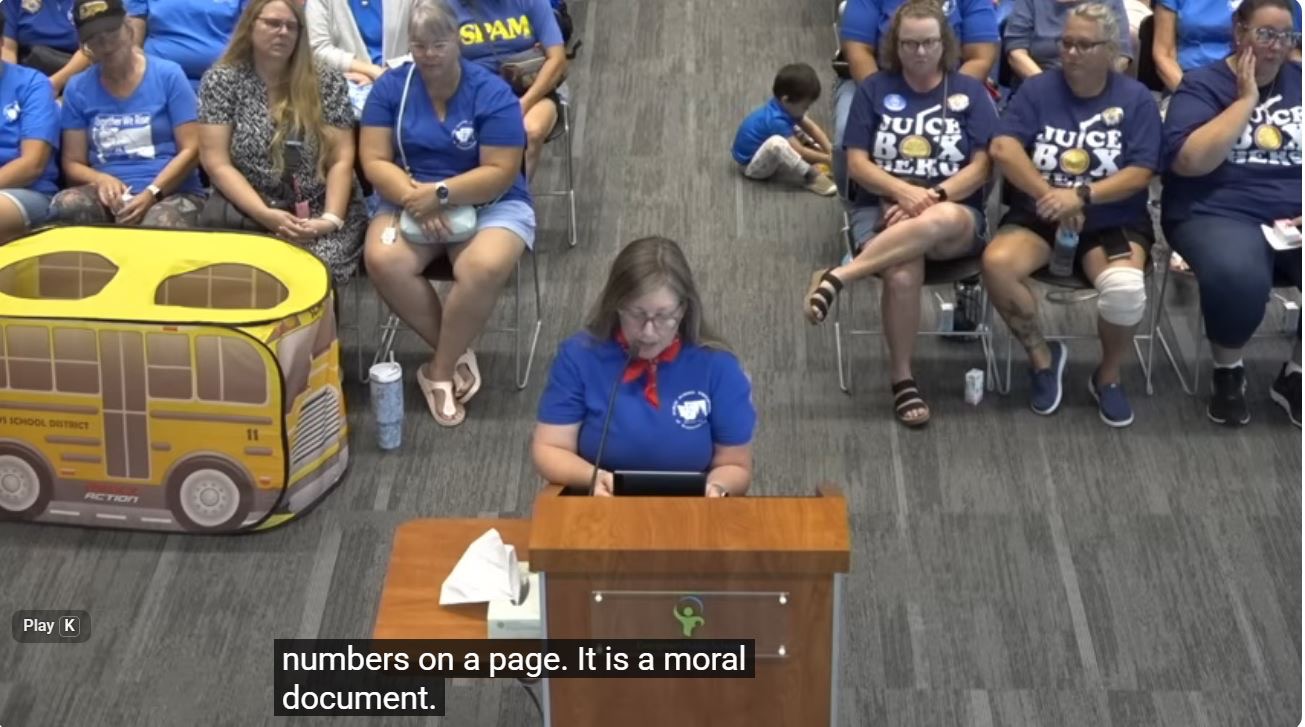
- June 15, 2026: The massive community fallout over the “nuclear family” proclamation turned the city council chambers into a powder keg. A total of 63 people signed up to testify during an intense, gridlocked public meeting that kept councilors and city staff trapped in City Hall for nearly six hours.
A Note on Public Information: The specific public records request referenced here specifically asked for legal money spent tracking invocations. Given how much cross-over there has been with staff and legal hours managing the intense fallout from Overholser’s specialized proclamations, a separate, extensive public records request is urgently needed to uncover the true administrative and legal costs tied strictly to these mayoral declarations.
Friction in Chambers: Councilors vs. The Lawyers
The paper trail only tells part of the story. The real tension is boiling over during broadcasted study sessions and regular council meetings, showcasing sharp public friction between the council majority and the city’s legal parameters.
During a heated meeting on May 18, 2026, Councilor Troy McCoy attempted to waive attorney-client privilege to open the city’s official legal opinions regarding council prayer to the public, aiming to let Battle Ground residents see the exact legal and financial risks the city attorneys warned them about.
The motion was aggressively blocked. Mayor Overholser, Deputy Mayor Aimee Vaile, Brian Munson, and Victoria Ferrer all voted “no” to releasing the legal advice. As Councilor McCoy noted on the record:
“So, just for the record, four of you do not want to let the public know our legal implications of adding prayer to this meeting.”
The Legal Team is Walking Away
This continuous pushback against legal boundaries explains the biggest bombshell currently hitting City Hall: the city’s legal defense team is stopping their representation of the council.
When council members point out that changing the governance manual to accommodate these theological statements leaves the city with “no guardrails on proclamations, at all,” the structural strain on city staff becomes glaringly apparent. Dissenting council members have openly warned that the body is wading into incredibly dangerous territory, gridlocking local government over non-binding “political theater” while urgent city business sits on the back burner.
Faced with a client that consistently ignores legal advice, demands maneuvers around the Washington State Constitution, and creates massive municipal liability, the attorneys of Menke Jackson Beyer, LLP are choosing to protect their professional standing rather than go down with a sinking legal ship. No reputable law firm wants to bill hours defending a city council that actively tries to hide its own legal warnings from the public.
The Big Picture
Mayoral proclamations do not change city operations or pass enforceable laws. Invocations do not fix potholes, balance the municipal budget, or fund emergency services. Yet, under a leadership block deeply tied to Maddox Transformer, Battle Ground is expending its operational bandwidth, staff hours, and legal budget to satisfy a narrow religious faction.
When ideology takes priority over public process, it’s the local taxpayer who pays the bill. Clark County Tomorrow will continue to track the exact dollar amounts and policy changes as this story develops.


Leave a Reply