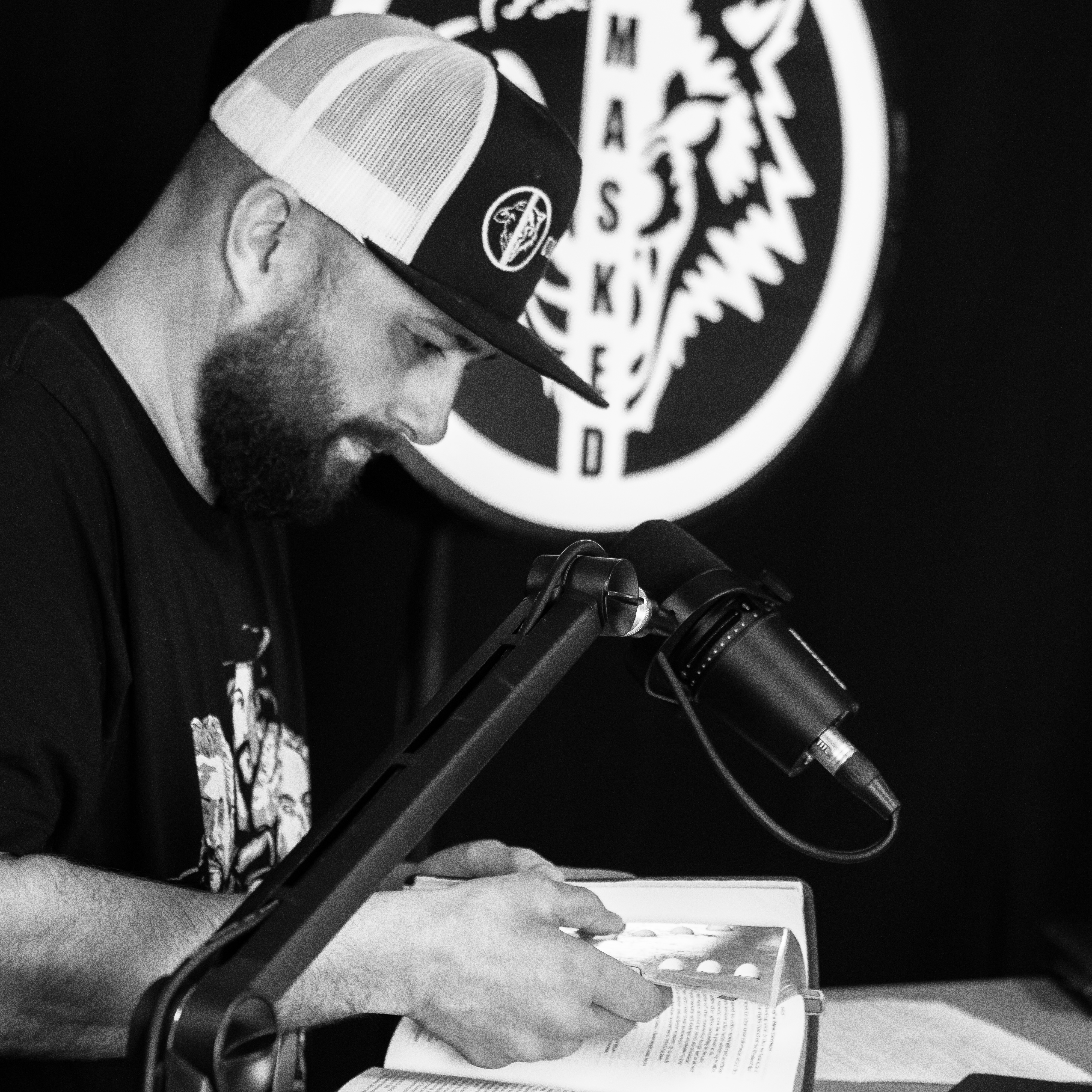
A series of highly charged public proclamations has turned Battle Ground City Council meetings into a battleground of their own. While these measures are presented under the guise of civic unity or traditional values, a closer look at the individuals drafting and submitting them reveals a coordinated effort tied directly back to one specific institution: Master’s Bible Church in Vancouver, WA.
Led by “Deacon” Tyler Long, the church has increasingly integrated its theological worldview into local governance, raising sharp questions about the blurring lines between church and state.

The Pulses Behind the Proclamations
The recent political turbulence in Battle Ground isn’t happening in a vacuum. It is being fueled by specific legislative language brought forward by members and speakers of Master’s Bible Church, targeting highly polarizing cultural issues.
1. The Anti-Antifa Proclamation

The push to introduce an explicitly political “anti-Antifa” stance to the city council was driven forward by Jesse McCarty. McCarty, a Vancouver, WA resident who has served as a speaker at Master’s Bible Church, wrote and successfully submitted the proclamation. While framed as a denunciation of political violence, critics argue its specific partisan framing was designed to inflame local divisions rather than heal them.
(image via LinkedIn)

The resulting fallout made regional and national headlines, as documented in the media coverage.
Despite intense pushback from community members who feel these measures bring unnecessary national culture wars into small-town governance, Battle Ground Mayor Eric Overholser has doubled down, firmly standing by the divisive anti-Antifa and pro-ICE language injected into the city’s official record.
The Institutional Architecture: Tyler Long and the “Moral Framework”
The direct connection between municipal policy and Master’s Bible Church was further cemented during public testimony by Tyler Long.
Long, who actively used online platforms to mobilize supporters to pack the council chambers, publicly thanked Mayor Overholser for his “wisdom and leadership” in pushing forward the controversial measures. Defending the partisan language, Long dismissed claims that the city council was manufacturing unnecessary culture wars, arguing instead that the proclamations simply reflected broad community values. “Each of these are 80/20 issues, if not 90/10,” Long stated, asserting that such measures do not cause civic friction but merely expose it: “the contrast needs to be painted”.

He explicitly framed the legislation as an ideological baseline for local governance, stating, “The proclamations communicate to the public, this is the worldview and moral framework through which I perform my duties”.
2. The “Traditional Nuclear Family” Proclamation
More recently, a proclamation titled “In Recognition and Celebration of Battle Ground’s Traditional, Nuclear Families” was signed into effect by Mayor Overholser.
The document explicitly defines the family as strictly “comprising a husband, a wife, and their children.”

This proclamation was written and submitted by Philip Ridgeway. Ridgeway’s involvement exposes a deep layer of ideological irony:
The Master’s Church Connection: Ridgeway has been a featured speaker and leader at workshops hosted by Master’s Bible Church, including their “Reforming Hearts & Homes” marriage conference featured in the church’s promotional materials.

The IVF Contradiction: While the proclamation heavily moralizes a rigid, traditional biological framework for family life, Ridgeway and his wife famously welcomed unique national attention for having children via IVF (using embryos that had been frozen for three decades). Critics point out the hypocrisy of using the power of local government to codify a restrictive, narrow definition of “family” that many strict theological dogmas—often aligned with Christian Nationalism—actively oppose or seek to regulate.

From the Pulpit to the Ballot Box
The individual actions of McCarty and Ridgeway reflect the broader institutional mission of Master’s Bible Church under Tyler Long. The church does not shy away from direct political intervention.
As documented in the image below, the church distributes an official Master’s Bible Church Voters Guide. Rather than remaining neutral or focusing purely on broad moral principles, the guide gives explicit instructions to congregants on local measures and candidates across Vancouver, Camas, and Battle Ground—even explicitly labeling opposing candidates as “horrible” or “leftists” to be defeated.

Additionally, the church actively secures civic space for religious framing, such as the “National Day of Prayer” proclamation signed by Mayor Overholser, which asserts that faith and prayer are the foundational bedrock upon which “self-government was always understood to stand.

Core Beliefs: “Winning It Back for God’s Glory”
Tyler Long’s public remarks, podcasts, and sermons outline a worldview firmly rooted in Christian Dominionism and incremental political takeover. Rather than keeping faith separate from civic duties, Long explicitly advocates that Christians are morally obligated to systematically reclaim political and social territory.
Political Incrementalism: In a sermon titled “The Patriarchy: God’s Design for Leadership,” Long directly detailed his political strategy, warning Christians against an “all-or-nothing view in politics.” He stated: “In society you can’t score a touchdown on every play but there is progress in small 3-to-4 yard gains… we’re the ones who lost it, and we owe it to [God] and we owe it to our neighbors who we’re charged to love to win it back for God’s glory.”
Rejecting Modern Social Inclusivity: Through his Unmasked platform, Long actively campaigns against concepts like modern social justice, calling them “ungodly attempts at unity” that bring dishonor to the gospel. He advocates for rigid, traditional patriarchal structures within both the family unit and the state.

How He Is Bringing His Worldview Into Battle Ground
Long lives outside Battle Ground city limits and serves as an elected Precinct Committee Officer (PCO) for the Clark County Republican Party, giving him direct, structural political leverage in the region. He uses three primary mechanisms to bridge the gap between his Vancouver church and Battle Ground politics:
1. Codifying a Religious “Moral Framework” into Local Law
Long is a vocal defender of Mayor Eric Overholser’s municipal proclamations (such as the anti-Antifa, pro-ICE, and traditional family declarations submitted by fellow church associates). Testifying before the Battle Ground City Council, Long explicitly celebrated these political statements as a mechanism for establishing a singular religious authority over the town, stating:
“The proclamations communicate to the public, this is the worldview and moral framework through which I perform my duties.”
2. Privately Funding Local Political Disruption
Long does not just speak at podiums; he uses his private resources to influence local elections. He was placed under investigation by the Washington State Public Disclosure Commission (PDC) after it was revealed he privately financed highly controversial, deceptive anti-levy political mailers during a Battle Ground Public Schools levy election. While the mailers claimed to be sponsored by the state and county Republican parties, both organizations denied financial backing. The school levy subsequently failed.

3. Institutional Mobilization
As a leader and teacher at Master’s Bible Church, Long serves as the logistical bridge between the church’s congregants and Battle Ground’s civic spaces. He systematically uses online organizing to mobilize conservative church members to pack local city council chambers—applying direct pressure on elected officials to adopt policies like Christian invocations to start secular council meetings.

Ultimately, the friction in Battle Ground is about more than just specific proclamations; it is a fundamental test of the character of our local democracy.
When the line between a specific religious institution and the municipal council room dissolves, the “common life” that city leadership claims to protect is the first casualty.
A healthy, flourishing town depends on a public space where every resident is safe, seen, and celebrated—regardless of their alignment with the rigid dogmas of a single church.
If Battle Ground is to remain a community that truly belongs to all of its citizens, the public must demand transparency, reject the outsourcing of governance to private ideological groups, and reclaim the council chamber for the common good. The future of this town is not a sermon to be preached; it is a collective civic responsibility that belongs to everyone.



Leave a Reply